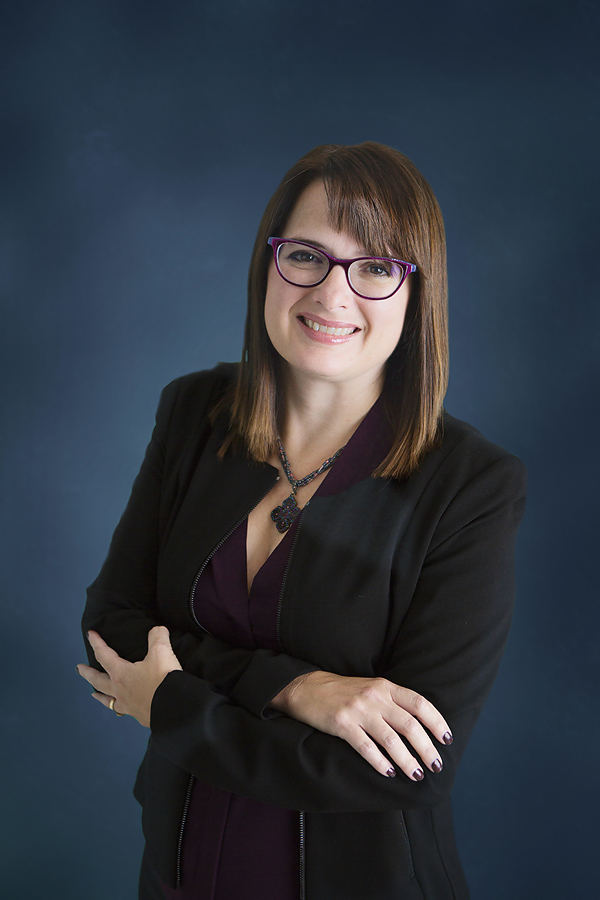
Dr. Jeanne L. Koehler
Jeanne Koehler has spent more than two decades in a variety of settings where the same thing is true: when the right people find each other around a hard problem, something moves. The question she brings into every room is what it will take to keep that momentum going once the outside support is gone.
That question came directly from her NSF-funded doctoral research at the University of Illinois—a study of STEM teachers in low-income schools who were already building learning beyond the classroom. Summer science camps. Community partnerships. Environments for experiential learning that didn't depend on the school schedule to survive. What the research revealed was not a formula. It was the recognition that no single person—however skilled, however committed—can move a system alone. What moves systems is people, finding each other around a problem that matters, and deciding together what to do next. That finding is still the center of every project.
The work has crossed a lot of sectors. At SIU School of Medicine, it looked like co-designing the Trauma-Informed Partnership with five pilot schools and the community organizations that made it sustainable—and launching Little Leaps, a brain development program in Hillsboro that families and educators built together and continue to run. At one of the largest insurance companies in the country, it looked like 14 years of research at scale—seven before the PhD and seven after—spanning workforce, organizational, and customer research, and working alongside senior leaders on the questions that shaped what came next. That research contributed to a U.S. Patent: Methods and Systems for Automated Vehicle Seat Replacement (Patent 12469279, November 2025).
In every room, the through-line is the same: who isn't being reached, and what does it take to design something that actually gets there? The answer is almost always people—brought into the process early, trusted with the design, and connected to each other in ways that hold after the engagement ends.
She holds a PhD in Curriculum and Instruction from the University of Illinois and a CPCU credential, and she continues to teach at the graduate level. Research2Grow—founded in 2022—is the formal home for work she has been doing alongside a full-time career for most of her professional life.
Her husband, Wade, founded Forte Association Management nearly 20 years ago—memberships, certifications, conferences, operations. Jeanne has served as Vice President since the beginning. Between the two of them, there is very little about how associations actually work that they have not navigated together.
Why this works across sectors
The problems worth solving already have people committed to them — quietly, practically, without much fanfare. What is often missing is someone who can find those people, connect them to evidence and to each other, and build the structure that turns individual effort into collective momentum.
Most consultants have gone deep in one world. Jeanne has worked simultaneously across K-12 school districts, academic medicine, higher education, insurance operations, AI strategy at enterprise scale, and professional association credentialing — not one after another, but at the same time.
That breadth is not incidental. It is the methodology. Science advances by testing whether a pattern holds across different conditions. The same logic applies here. A faculty development challenge at a medical school and an AI adoption question at an insurance company are different contexts, but the underlying dynamic is structurally the same: when people are genuinely inside a problem space, not briefed on it or managed through it but actually in it, they generate the momentum themselves. People are not the variable to be managed. They are the change. Without them in the problem space, nothing that follows lasts. Working across sectors simultaneously is what makes that pattern visible and replicable. But the pattern does not repeat on its own. It has to be built deliberately, connecting people to the data, the evidence, and the expertise that meets them inside the problem. When it holds, expertise stops being something any one person holds. It becomes distributed — alive in the people who discover they can move something they thought was immovable.
PhD · Curriculum & Instruction, U of I
CPCU
NSF-Funded Research
Graduate Faculty
AERA Presenter
Published · Springer, JACS, Pediatrics, ATD
Deputy Editor · Teaching & Learning in Medicine
NSF EnLiST · STEM Education Research